

How Often Should You Get Teeth Cleaning
Maintaining healthy teeth and gums goes far beyond brushing and flossing at home. One of the most common questions patients ask is:
How often should you get teeth cleaning?
The general recommendation from dental professionals worldwide is every six months, but the real answer depends on your oral health, lifestyle habits, and risk of gum disease.
At Teeth Care Multispeciality Dental Clinic, we provide customized cleaning schedules to help patients maintain healthy gums, prevent cavities, and avoid costly dental procedures. This detailed guide explains how often you truly need dental cleanings and why they matter.
What Is Professional Teeth Cleaning?
Professional teeth cleaning, also called scaling and polishing, is a preventive dental procedure that removes plaque, tartar (calculus), and bacteria from tooth surfaces and below the gumline. Even with excellent brushing, certain areas are difficult to reach, allowing plaque to harden over time.
Dental cleaning is a core part of general dentistry services in Kolkata and is essential for both adults and children, some people also get it done for cosmetic dentistry reasons.
Why Regular Teeth Cleaning Is Necessary
Your mouth naturally contains bacteria. When food particles remain on teeth, bacteria form plaque. If plaque is not removed, it hardens into tartar, which can only be removed by a dentist.
Key Reasons Professional Cleaning Is Important
-
Prevents cavities -
Stops gum inflammation -
Reduces risk of gum disease -
Eliminates bad breath -
Prevents tooth loss -
Detects oral problems early
Routine cleanings also support treatments like teeth whitening in Kolkata by creating a clean surface.
Standard Recommendation: Every Six Months
Most dental associations and experts recommend teeth cleaning every six months for people with good oral health.
Why Six Months Works
| Reason | Explanation |
| Plaque buildup cycle | Plaque accumulates gradually and hardens within months |
| Early detection | Dentists can identify issues before they worsen |
| Gum health monitoring | Prevents silent progression of gum disease |
| Cost-effective prevention | Avoids expensive treatments later |
Who Needs More Frequent Teeth Cleaning?
While six months suits many people, others require more frequent visits.
You May Need Cleaning Every 3-4 Months If You:
-
Have gum disease -
Smoke or use tobacco -
Have diabetes -
Experience heavy tartar buildup -
Have weak immunity -
Are prone to cavities -
Wear braces or dental appliances
This schedule is called periodontal maintenance, and it helps control harmful bacteria under the gums.
Children and Teeth Cleaning Frequency
Children benefit greatly from regular cleanings. Dental professionals usually recommend pediatric dentistry cleanings every six months for kids to prevent cavities and teach oral hygiene habits early.
Children undergoing orthodontic treatment may need more frequent cleanings due to plaque buildup around brackets.
Seniors and Dental Cleaning
Older adults often face higher risks of gum recession, dry mouth, and root decay. More frequent cleanings may be advised to protect gum health and preserve natural teeth.
What Happens During a Teeth Cleaning Appointment?
Understanding the procedure helps reduce anxiety.
| Step | What Happens | Purpose |
| Oral exam | Teeth and gums checked | Detect issues |
| Ultrasonic scaling | Removes tartar | Efficient cleaning |
| Hand scaling | Detailed cleaning | Remove deposits |
| Polishing | Smooth enamel | Remove stains |
| Fluoride | Strengthen enamel | Cavity protection |
Benefits of Regular Teeth Cleaning
Professional dental cleaning does more than just make your teeth look clean. It plays a vital role in protecting your oral health, improving your smile’s appearance, and saving you from expensive treatments later. Regular cleanings help stop small problems from turning into major dental issues.
Health Benefits
Routine cleaning removes harmful bacteria and plaque that cause infections and inflammation. Keeping your gums and teeth healthy also supports your overall body health.
-
Prevents gum disease -
Reduces inflammation -
Lowers systemic health risks
Cosmetic Benefits
Besides health advantages, professional cleaning also improves how your smile looks and feels. Teeth appear cleaner, brighter, and smoother after tartar and stains are removed.
-
Brighter smile -
Fresher breath -
Smoother teeth
Financial Benefits
Preventive dental care is far more affordable than treating advanced problems like gum surgery, root canals, or tooth replacements.
-
Preventive care costs less than treatments for advanced dental problems.
Risks of Skipping Teeth Cleaning
Ignoring professional cleaning can lead to:
-
Gingivitis -
Periodontitis -
Tooth loss -
Persistent bad breath -
Painful dental procedures
Cost of Teeth Cleaning in Kolkata
Cleaning charges vary depending on whether routine or deep cleaning is required. For detailed pricing, patients can contact the clinic or visit Teeth Cleaning in Kolkata.
Signs You Should Book a Cleaning Sooner
Ignoring professional cleanings allows bacteria to multiply and cause damage.
-
Bleeding gums -
Bad breath -
Tooth sensitivity -
Yellow tartar deposits -
Gum swelling
How to Maintain Oral Health Between Cleanings
Professional dental cleanings remove hardened plaque and bacteria, but daily care at home is what keeps your mouth healthy in the long run. Good habits between appointments help prevent tartar buildup, gum inflammation, and cavities, making your next cleaning easier and more comfortable.
Daily Oral Care Routine
A consistent oral hygiene routine protects your teeth and gums every day. These simple practices reduce bacterial growth and keep your smile healthy between professional visits.
-
Brush twice daily -
Floss daily -
Use mouthwash -
Avoid tobacco -
Eat a balanced diet
FAQ
How often should you get teeth cleaning if you have gum disease?
Every three to four months.
Can teeth cleaning prevent cavities?
Yes, by removing plaque and bacteria.
Is teeth cleaning painful?
Routine cleaning is usually comfortable.
How long does a cleaning appointment take?
30–60 minutes.
Do children need teeth cleaning?
Yes, typically every six months.
Every three to four months.
Yes, by removing plaque and bacteria.
Routine cleaning is usually comfortable.
30–60 minutes.
Yes, typically every six months.

Benefits of Professional Teeth Cleaning
Learn why professional dental cleanings are essential for healthy gums, fresh breath, and long-lasting oral health.
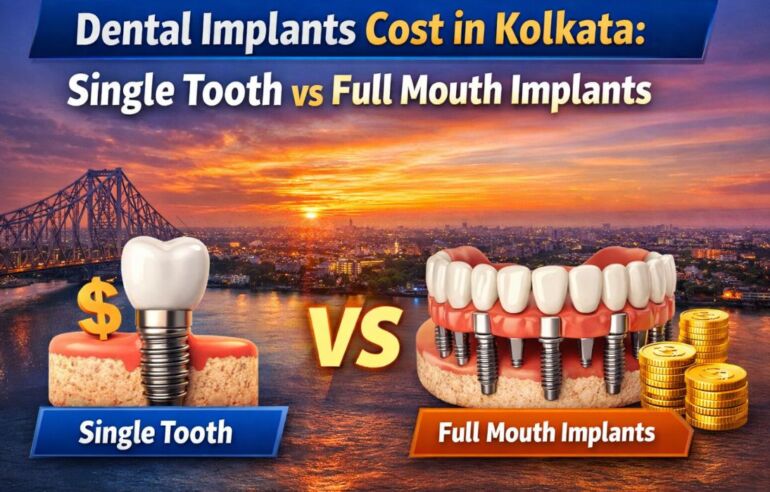
Dental Implants Cost in Kolkata: Single Tooth vs Full Mouth Implants
Dental implants are considered one of the most advanced and reliable solutions for replacing missing teeth. They restore chewing ability, improve facial appearance and help maintain jawbone health. At Teeth Care Multispeciality Dental Clinic, one of the most common questions we receive from patients is about the dental implants cost in Kolkata, especially when comparing single tooth implants and full-mouth dental implants.
Implant treatment cost varies from patient to patient because every mouth is different. The number of missing teeth, bone condition and type of implant solution required all play a role. This guide explains the cost differences clearly so you can make an informed decision with confidence.
To learn more about our clinic and approach, explore Teeth Care Multispeciality Dental Clinic below.
What Factors Influence Dental Implant Cost in Kolkata?
Dental implant pricing is customized because treatment planning depends on individual oral health. At our clinic, implant costs are calculated only after a detailed examination.
Key factors that influence implant cost include:
-
Number of teeth being replaced -
Type and brand of implant used -
Bone density and jaw structure -
Need for additional procedures such as bone grafting -
Type of crown or prosthetic teeth -
Complexity of the case -
Technology and diagnostics used
Our implant specialists ensure transparency so patients understand what they are paying for.
https://www.youtube.com/watch?v=9Aljmn2Y9YE
Single Tooth Dental Implant Cost in Kolkata
A single tooth dental implant is recommended when one tooth is missing and the surrounding teeth are healthy. It replaces the tooth root and crown independently without affecting nearby teeth.
At Teeth Care Multispeciality Dental Clinic, patients are often relieved to know that single tooth dental implant cost in Kolkata typically ranges between INR 18,000 to INR 37,000, depending on the implant system and crown material used.
What Is Included in a Single Tooth Implant?
-
Placement of a titanium dental implant -
Healing phase for bone integration -
Fixing a customised dental crown
Single tooth implants help prevent bone loss and offer a permanent solution compared to bridges or removable options.To understand the implant systems and techniques used by our specialists, visit our Implantology Service.
Single Tooth Implant vs Dental Bridge: Cost and Long-Term Value
Patients often compare implants with dental bridges when replacing a single tooth. Although bridges may appear cheaper initially, they require trimming healthy adjacent teeth and do not stop jawbone loss. Implants may cost more upfront but offer superior longevity and oral health benefits. For a detailed explanation, read single tooth implant vs bridge in Kolkata.
Full Mouth Dental Implants Cost in Kolkata
Full mouth dental implants are ideal for patients who have lost all or most of their teeth. Instead of replacing each tooth individually, this treatment uses strategically placed implants to support a full arch of fixed teeth. At Teeth Care Multispeciality Dental Clinic, we offer advanced full-mouth implant solutions based on patient needs.
Exact Cost for Full Mouth Dental Implants
-
All-on-4 full mouth dental implants start from INR 3,85,000 -
Final cost may vary based on bone condition, implant brand and prosthetic design
Why Full Mouth Implants Cost More
-
Multiple implant placements -
Advanced planning and diagnostics -
Skilled surgical expertise
While the initial investment is higher, full mouth implants provide long-term stability, comfort and natural function.
Single Tooth vs Full Mouth Implants: Cost Comparison
| Aspect | Single Tooth Implant | Full Mouth Implants |
| Number of implants | One | Multiple (All-on-4 or more) |
| Cost range | INR 18,000 – INR 37,000 | Starts from INR 3,85,000 |
| Treatment complexity | Low | High |
| Function restored | One tooth | Entire mouth |
| Long-term value | High | Very high |
Additional Procedures That May Affect Cost
Some patients may need additional treatments before implants can be placed safely. These procedures help ensure long-term success:
-
Bone grafting -
Sinus lift -
Gum disease treatment -
Tooth extraction
While these may increase overall cost, they significantly improve implant stability and lifespan.
What to Expect After Dental Implant Surgery
Understanding recovery is an important part of implant planning. Healing time and post-surgical care play a role in overall treatment success. To know more about healing, precautions and follow-up care, read what to expect after a dental implant.
Are Dental Implants Worth the Cost?
Dental implants offer unmatched benefits compared to traditional tooth replacement options:
-
Prevent jawbone shrinkage -
Restore natural chewing ability -
Improve facial aesthetics -
Last for decades with proper care -
Eliminate denture discomfort
Although implants involve an investment, they often reduce future dental expenses and improve quality of life.
Dental Implant Cost for Senior Patients
Age alone does not increase implant cost. Bone quality and overall health are more important factors. Many senior patients choose implant-supported dentures or full mouth implants to regain confidence and comfort.
For patients in North Kolkata, consultations are available at our Dental Clinic in Chinar Park.
Choosing the Right Clinic for Implant Treatment
Implant success depends on experience, planning and technology. Choosing treatment based only on low cost can lead to complications. Patients can visit our conveniently located clinics for expert care:
-
Dental Clinic Ballygunge -
Dental Clinic in Dunlop -
Dental Clinic in New Town -
Dental Clinic in Charnock -
Dental Clinic in Chinar Park
Why Choose Teeth Care Multispeciality Dental Clinic
Teeth Care Multispeciality Dental Clinic is trusted for safe, precise and long-lasting implant treatments in Kolkata. Our implantologists use advanced diagnostics and guided techniques to ensure predictable results.
What sets us apart:
-
Experienced implant specialists -
Advanced imaging and planning -
High-quality implant systems -
Strict sterilisation protocols -
Transparent cost discussion -
Flexible payment options
To know more about our team and philosophy, visit About Teeth Care Multispeciality Dental Clinic.
How to Get an Exact Implant Cost Estimate
The exact cost of dental implants can only be determined after a detailed examination and imaging.
To book a consultation with our specialists, visit Contact Us.
Conclusion
Understanding dental implants cost in Kolkata helps you choose the right treatment with confidence. Single tooth implants generally cost between INR 18,000 to INR 37,000, while full mouth dental implants such as All-on-4 start from INR 3,85,000. At Teeth Care Multispeciality Dental Clinic, we focus on long-term success, comfort and transparent pricing to deliver the best possible outcomes.
FAQs
What is the cost of a single tooth dental implant in Kolkata?
Single tooth implants usually range between INR 18,000 and INR 37,000.
How much do full mouth dental implants cost in Kolkata?
Full mouth implants such as All-on-4 start from INR 3,85,000.
Do implants require special care?
Yes. Implants preserve bone and do not damage adjacent teeth.
What is the cost of a single tooth dental implant in Kolkata?
No. Normal oral hygiene and regular checkups are sufficient.
How long do dental implants last?
With proper care, implants can last for decades.
Is implant treatment painful?
The procedure is done under local anesthesia and is comfortable.
Are EMI options available?
Yes. Flexible payment options are available.
How do I know which implant option is right for me?
A clinical evaluation helps determine the best solution.
Single tooth implants usually range between INR 18,000 and INR 37,000.Full mouth implants such as All-on-4 start from INR 3,85,000.
Yes. Implants preserve bone and do not damage adjacent teeth.
No. Normal oral hygiene and regular checkups are sufficient.
With proper care, implants can last for decades.
The procedure is done under local anesthesia and is comfortable.Yes. Flexible payment options are available.A clinical evaluation helps determine the best solution.
Best Age to Get Dental Implants: A Complete Patient Guide
Dental implants are one of the most trusted ways to restore missing teeth. They look natural, feel strong and help maintain long term oral health. Many patients who visit our clinic want to know the best Age to Get Dental Implants to consider implants. While age plays a role, it is not the only deciding factor. Bone density, jaw development, gum health and overall medical condition are equally important.
If you want to explore our treatments or understand more about the clinic, you can learn about Teeth Care Multispeciality Dental Clinic.
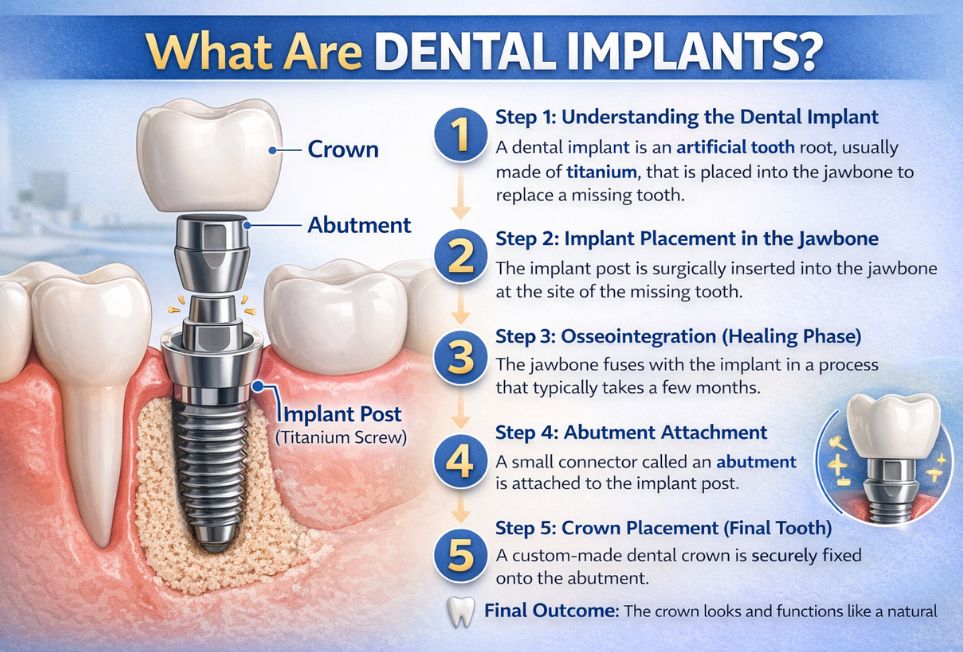
What Are Dental Implants?
Dental implants are titanium posts placed in the jawbone to replace missing tooth roots. After they fuse with the bone, they provide a strong foundation for a crown, bridge or denture. They function like natural teeth and preserve bone structure.
If you want to see the types of implant procedures we offer, refer to our Implantology Service.
Is There a Perfect Age for Dental Implants?
There is no single perfect age. Instead, there is an optimal age range when the jawbone is fully developed and healthy enough to support implants. Most dentists wait until jaw growth is complete before considering implant placement.
General guidelines:
-
Not recommended before age 18 -
Ideal age range: 25 to 60 -
Seniors above 60 can still qualify depending on bone health
Bone maturity and health are more important than age alone.
Minimum Age for Dental Implants
Teenagers usually do not qualify for implants because their jawbone continues to grow until late teens or early twenties. Placing implants too soon can result in misalignment as the jaw develops.
For an evaluation or consultation, you can visit our Dental Clinic Ballygunge branch.
Ages 25 to 40
This is considered the most favourable time for dental implants. Bone density is strong, healing is quicker and implant integration is predictable. Patients in this group often achieve the longest lasting results.
Ages 40 to 60
Many patients experience tooth loss in this age group due to gum disease or wear. With proper evaluation and disease management, implants work very well. Recovery is stable and long lasting.
Ages 60 and above
Seniors often believe they are too old for implants, which is not true. As long as bone density and overall health are acceptable, implants can be placed safely even in older adults.
If you live near our Chinar Park location, you can visit our Dental Clinic in Chinar Park for a detailed implant assessment.
Who Should Avoid Dental Implants?
Not every patient is an immediate candidate. Implants may not be recommended in cases such as:
-
Active gum infection -
Uncontrolled diabetes -
Heavy smoking -
Severe untreated bone loss -
Chronic teeth grinding -
Certain immune disorders
With proper treatment planning or lifestyle adjustments, many patients can still qualify later.
How Bone Health Influences Implant Success
Even if you fall within the ideal age range, bone density plays a major role. A CBCT scan helps measure bone height, width and quality. If the jawbone is insufficient, bone grafting or sinus lift procedures can help create support for implants.For patients in and around Dunlop, you can consult our Dental Clinic in Dunlop for bone assessment and detailed implant planning.
Why the Right Age Improves Results
Placing implants at the right time contributes to:
-
Faster healing -
Stronger fusion with bone -
Higher stability -
Better chewing function -
Lower risk of complications -
Long lasting results
Correct timing ensures a smoother experience and predictable outcomes.
Benefits of Early Implant Placement (25-40)
Getting implants earlier in life provides several long term advantages:
-
Prevents jawbone shrinking -
Maintains alignment of nearby teeth -
Supports facial structure -
Reduces the need for complex future treatments -
Provides natural chewing stability -
Preserves oral health
Younger patients often enjoy the longest lifespan for implants due to stronger bone health.
Are You Too Old for Implants?
There is no upper age limit. Many older adults choose implants to improve comfort and stability. If bone density is sufficient and medical conditions are stable, seniors can safely receive implants.To learn about our clinic’s expertise, history and team, you can visit About Teeth Care Multispeciality Dental Clinichttps://www.youtube.com/watch?v=9Aljmn2Y9YE
How to Know If You Are a Suitable Candidate
A comprehensive evaluation helps determine eligibility. The dentist will assess:
-
Digital X rays or CBCT scan -
Gum health condition -
Bone density level -
Bite alignment -
Medical history -
Lifestyle habits
Once evaluated, a personalised treatment plan is created.
To book your appointment directly, you can use the Contact Us page.
Why Choose Teeth Care Multispeciality Dental Clinic
Teeth Care Multispeciality Dental Clinic is known for its advanced implant solutions supported by digital diagnostics and experienced implantologists. Our team focuses on precision, comfort and long term success.
What makes our clinic a trusted choice:
-
Skilled and experienced implant surgeons -
Guided implant surgery -
Advanced scanning and imaging -
High quality implant systems -
Clean and hygienic environment -
Patient focused approach -
Affordable EMI options available
We ensure smooth treatment, predictable healing and natural looking results.
Conclusion
The best age to get dental implants is usually between 25 and 60. However, age alone does not determine suitability. Bone health, gum condition and overall medical status are the key deciding factors. With proper evaluation and planning, implants can be placed safely in younger as well as older adults.
If you want to explore more helpful dental articles, you can visit our Teeth Care Blogs section.
FAQs
What is the best age for dental implants?
The ideal age is between 25 and 60 because bone density and healing are optimal.
Can teenagers get implants?
Not usually. Jaw growth must be complete before considering implants.
Are implants suitable for senior citizens?
Yes. Seniors often qualify if their bone health is good.
How long do implants last?
With proper care, implants can last for decades.
Does the implant procedure hurt?
The procedure is done under local anesthesia, so discomfort is minimal.
How long is the healing period?
Gum healing takes two weeks, and full bone integration takes a few months.
What if I do not have enough bone?
Bone grafting or sinus lift can help build adequate support.
Why choose Teeth Care Multispeciality Dental Clinic?
We use advanced technology, guided surgery and experienced implantologists, to best Age to Get Dental Implants for safe and successful results.
The ideal age is between 25 and 60 because bone density and healing are optimal.
Not usually. Jaw growth must be complete before considering implants.
Yes. Seniors often qualify if their bone health is good.
With proper care, implants can last for decades.
The procedure is done under local anesthesia, so discomfort is minimal.
Gum healing takes two weeks, and full bone integration takes a few months.
Bone grafting or sinus lift can help build adequate support.
We use advanced technology, guided surgery and experienced implantologists, to best Age to Get Dental Implants for safe and successful results.
What to Expect After a Dental Implant?
Dental implant treatment is a highly predictable and long-lasting solution for missing teeth, but many patients feel anxious about the recovery phase. Understanding what happens after implant placement helps reduce fear and ensures better healing.
At Teeth Care Multispeciality Dental Clinic in Kolkata, we guide our patients through every stage of dental implant recovery with clarity, medical precision, and continuous support. This detailed guide explains exactly what to expect after a dental implant, from the first day to long-term care.
Immediately After Dental Implant Surgery (First 24 Hours)
The first 24 hours after dental implant placement are crucial for proper healing. During this period, your body begins the initial healing response and forms a protective clot around the implant site.
Most patients experience mild and manageable symptoms that settle quickly when post-operative instructions are followed carefully.
Normal Post-Surgery Symptoms
| Symptom | What It Means | Expected Duration |
| Mild bleeding | Natural clot formation | Few hours |
| Numbness | Effect of anesthesia | 2-4 hours |
| Gum tenderness | Tissue healing response | 1-2 days |
| Mild swelling | Normal inflammation | 2-3 days |
Patients treated under our advanced dental implant treatment in Kolkata generally experience minimal discomfort due to precise surgical planning.
Pain After a Dental Implant in kolkata
Pain after dental implant surgery is usually mild and far less than what patients expect. Most people compare it to routine dental procedures rather than surgery.
Pain intensity reduces steadily each day and is easily controlled with prescribed medication.
Pain Timeline After Implant Placement
| Time Period | Expected Pain Level | Management |
| Day 1 | Mild soreness | Prescribed medication |
| Day 2-3 | Slight tenderness | Normal healing |
| Day 4-5 | Significant reduction | Minimal or no medication |
| After 1 week | No pain | Full comfort |
Persistent or increasing pain after the fourth day should always be evaluated by your dentist.
Swelling and Bruising After Implant Surgery
Swelling is a natural part of the healing process and indicates that your body is responding correctly to surgery. Bruising may appear externally in some cases but resolves naturally.
Most patients visiting our Kolkata clinics notice controlled swelling due to careful tissue handling.
Swelling Progression
| Day | Swelling Status | Normal Expectation |
| Day 1 | Minimal | Normal |
| Day 2-3 | Peak swelling | Expected |
| Day 4-5 | Gradual reduction | Healing phase |
| Day 7 | Mostly resolved | Normal recovery |
Eating After Dental Implant Surgery
Diet plays a critical role in protecting the implant site and supporting healing. Soft foods reduce pressure on the implant and help prevent complications.
Chewing on the opposite side of the implant is strongly recommended during early recovery.
Diet Timeline After Implant Placement
| Timeframe | Food Texture | Purpose |
| First 24 hours | Soft and cool | Protect clot |
| Day 2-5 | Soft solids | Reduce pressure |
| After 1 week | Semi-normal | Healing support |
| After crown placement | Normal | Full function |
Hot, hard, or sticky foods should be avoided until your dentist confirms stability.
Oral Hygiene After Dental Implant Placement
Maintaining oral hygiene is essential for implant success, but cleaning must be gentle during early healing. Proper hygiene prevents infection and supports bone integration.
Patients are carefully guided by our prosthodontics and smile restoration department on safe cleaning techniques.
Oral Care Guidelines
| Time Period | Cleaning Approach | Reason |
| First 24 hours | Avoid brushing site | Protect healing tissue |
| After 24 hours | Gentle brushing | Prevent plaque |
| After 3 days | Normal brushing nearby | Support healing |
| Long term | Regular hygiene | Implant longevity |
Osseointegration: Bone Healing Around the Implant
Osseointegration is the most important phase of implant recovery. During this stage, the implant fuses permanently with the jawbone.
This biological process ensures the strength and long-term stability of the dental implant.
Osseointegration Timeline
| Phase | Duration | What Happens |
| Early healing | 2-4 weeks | Bone adaptation |
| Active integration | 2-3 months | Bone fusion |
| Final integration | 3-6 months | Full stability |
The success of this phase determines how long your implant will last.
Stitches and Follow-Up Visits
Stitches help the gum heal properly around the implant and usually dissolve on their own. Follow-up visits allow dentists to monitor healing and prevent complications.
Patients are encouraged to attend reviews at the New Town dental clinic, where advanced diagnostics support precise healing assessment.
Stitch and Review Timeline
| Aspect | Expected Time |
| Stitch dissolution | 7-10 days |
| First follow-up | 7 days |
| Healing review | 4-6 weeks |
| Crown planning | After integration |
Temporary Teeth During Healing
Temporary restorations may be provided depending on the location of the implant. These restorations are designed to maintain appearance while protecting the implant.
They are carefully shaped to avoid pressure on the healing implant.
Temporary Restoration Usage
| Implant Location | Temporary Tooth | Purpose |
| Front teeth | Often provided | Aesthetics |
| Back teeth | Sometimes avoided | Protection |
| Multiple implants | Case-dependent | Function support |
Final Crown Placement After Healing
Once osseointegration is complete, the final crown is placed to restore full chewing and appearance. This stage completes the implant treatment.
Implant crowns are custom-designed under the supervision of Dr. Sanket Chakraverty, Prosthodontist and Implantologist, ensuring precise bite alignment.
Final Restoration Process
| Step | Description |
| Implant exposure | Access implant |
| Abutment placement | Connector fixed |
| Crown fitting | Custom ceramic tooth |
| Bite adjustment | Comfort ensured |
Long-Term Care After a Dental Implant
Dental implants require the same care as natural teeth. Consistent hygiene and regular dental visits ensure long-term success.
With proper care, implants can last for decades.
Long-Term Implant Maintenance
| Care Aspect | Recommendation |
| Brushing | Twice daily |
| Flossing | Daily |
| Dental visits | Every 6 months |
| Professional cleaning | As advised |
Warning Signs After Dental Implant Surgery
Certain symptoms should never be ignored as they may indicate complications. Early intervention prevents implant failure.
When to Contact Your Dentist
| Symptom | Clinical Significance |
| Increasing pain | Possible infection |
| Persistent swelling | Healing issue |
| Implant movement | Integration failure |
| Pus or fever | Infection |
Why Dental Implant Recovery Is Better Than Other Options
Compared to dentures or bridges, dental implant recovery offers better comfort, stability, and oral health benefits.
Patients report higher confidence and chewing efficiency once healing is complete.
Comparison of Tooth Replacement Recovery
| Factor | Implant | Bridge | Denture |
| Stability | Excellent | Moderate | Low |
| Bone preservation | Yes | No | No |
| Long-term comfort | High | Medium | Low |
| Maintenance | Normal | Moderate | High |
Why Choose teethcare in Kolkata
Choosing the Teeth Care Multispeciality Dental Clinic plays a major role in recovery success. Teeth Care combines experience, technology, and ethical treatment planning. Patients can learn more through our multispeciality dental clinic profile in Kolkata and explore specialists via the expert dental care team network. Clinical Strengths
| Aspect | Benefit |
| Experienced implantologists | Predictable results |
| Digital diagnostics | Precision planning |
| Multispeciality care | Safety |
| Multiple Kolkata locations | Convenience |
Conclusion
Knowing what to expect after a dental implant removes uncertainty and builds confidence. With modern techniques and proper care, dental implant recovery is smooth, comfortable, and highly successful. At Teeth Care Multispeciality Dental Clinic, we remain committed to guiding every patient from surgery to final crown with transparency, expertise, and long-term care, so your new smile stays strong for life.
FAQ about After a Dental Implant!
How long does it take to recover after a dental implant?
Initial recovery usually takes 7–10 days, while complete bone integration and healing can take 3–6 months depending on bone quality and overall health.
Is pain normal after a dental implant?
Mild discomfort is normal for a few days after implant surgery. Pain typically reduces daily and is manageable with prescribed medication.
How long does swelling last after implant surgery?
Swelling usually peaks within 48–72 hours and gradually subsides over the next few days. Most swelling resolves within one week.
When can I eat normally after a dental implant?
Soft foods are recommended for the first few days. Normal eating can resume gradually once healing progresses and the dentist confirms stability.
How do I clean my mouth after dental implant surgery?
Gentle brushing can start after 24 hours. The implant area should be kept clean without aggressive brushing or forceful rinsing.
What is osseointegration in dental implants?
Osseointegration is the process where the implant fuses with the jawbone, providing strength and long-term stability. This process usually takes several months.
Can a dental implant fail during healing?
Implant failure is rare but can occur due to infection, smoking, or poor oral hygiene. Regular follow-ups help detect and prevent issues early.
When is the final crown placed on a dental implant?
The final crown is placed after complete bone integration, usually between 3 to 6 months after implant placement.
Do dental implants need special long-term care?
No special care is required. Dental implants should be maintained like natural teeth with brushing, flossing, and regular dental visits.
Initial recovery usually takes 7–10 days, while complete bone integration and healing can take 3–6 months depending on bone quality and overall health.
Mild discomfort is normal for a few days after implant surgery. Pain typically reduces daily and is manageable with prescribed medication.
Swelling usually peaks within 48–72 hours and gradually subsides over the next few days. Most swelling resolves within one week.
Soft foods are recommended for the first few days. Normal eating can resume gradually once healing progresses and the dentist confirms stability.
Gentle brushing can start after 24 hours. The implant area should be kept clean without aggressive brushing or forceful rinsing.
Osseointegration is the process where the implant fuses with the jawbone, providing strength and long-term stability. This process usually takes several months.
Implant failure is rare but can occur due to infection, smoking, or poor oral hygiene. Regular follow-ups help detect and prevent issues early.
The final crown is placed after complete bone integration, usually between 3 to 6 months after implant placement.
No special care is required. Dental implants should be maintained like natural teeth with brushing, flossing, and regular dental visits.
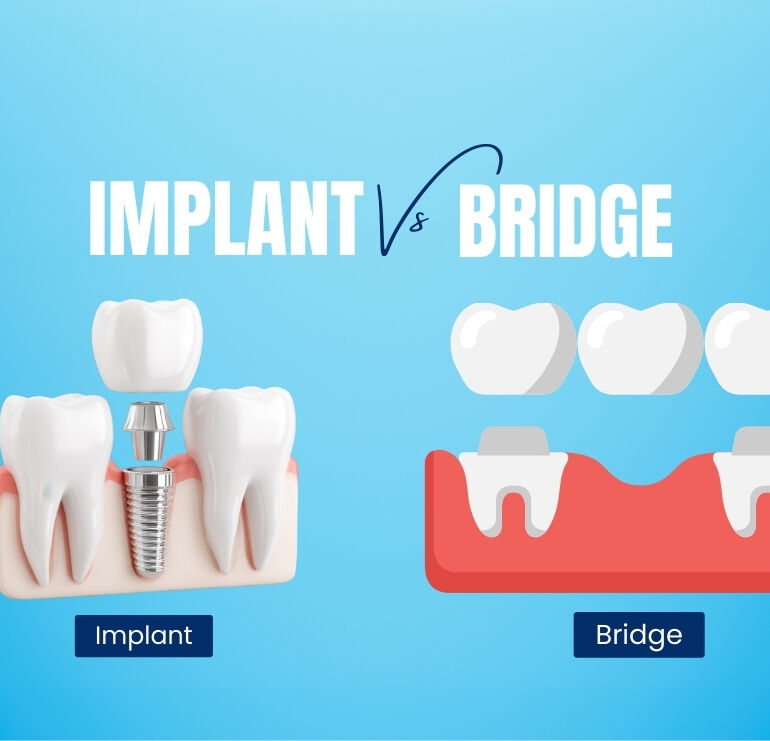
Single Tooth Implant vs Bridge in Kolkata
A single missing tooth may look like a small problem, but medically it can create serious long-term complications if ignored. At Teeth Care Multispeciality Dental Clinic in Kolkata, we regularly treat patients from New Town, Chinar Park, Ballygunge, Dunlop, and Charnock who come to us after suffering jawbone loss, facial sagging, drifting teeth, bite imbalance, and chewing difficulty caused by just one missing tooth.
The most common question we hear is:“What is better for one missing tooth – a single tooth implant or a dental bridge?”
Both treatments are effective, but they work in completely different ways. This expert guide will help you understand the difference between single tooth implant vs bridge, their cost in Kolkata, durability, comfort, appearance, bone health impact, and which option is better for you.
Why Replacing a Single Missing Tooth Is Medically Important
When a tooth is lost and not replaced on time, the following changes begin silently:
- Jawbone starts shrinking
- Nearby teeth tilt into the empty space
- Bite becomes uneven
- Gum infection risk increases
- Facial structure begins collapsing
- Chewing efficiency reduces
This is why dentists strongly recommend early single tooth replacement in Kolkata using modern treatment options.
What Is a Single Tooth Dental Implant?
A single-tooth dental implant is a permanent replacement where a titanium implant is placed inside the jawbone to function like a natural tooth root. Once it bonds with the bone, a ceramic crown is placed on top to restore full function and appearance.
At Teeth Care, this is done through our advanced implantology treatment in Kolkata using digital planning and guided implant placement.
Components of a Single Tooth Implant
| Component | Function |
| Titanium Implant | Artificial tooth root |
| Abutment | Connector |
| Ceramic Crown | Natural visible tooth |
Main Benefits of Single Tooth Implant
- Permanent solution
- Prevents jawbone shrinkage
- No damage to nearby teeth
- Feels like a natural tooth
- Strong chewing power
- 25+ years of durability
Implants at our clinic are placed under the expertise of Dr. Sanket Chakraverty, Prosthodontist & Implantologist, who handles complex implant restorations.
What Is a Dental Bridge?
A dental bridge replaces a missing tooth by trimming the two adjacent teeth and using them to support an artificial tooth in between. This treatment is part of our restorative dental solutions for missing teeth and is often recommended when implants are not possible.
Types of Dental Bridges
- Traditional Bridge
- Cantilever Bridge
- Maryland Bridge
- Implant-Supported Bridge
Advantages of Dental Bridge
- Faster treatment
- No surgery
- Lower starting cost
- Suitable for low bone density patients
Implant vs Bridge – Quick Comparison
| Feature | Implant | Bridge |
| Replaces root | Yes | No |
| Affects nearby teeth | No | Yes |
| Prevents bone loss | Yes | No |
| Lifespan | 25+ years | 8-12 years |
| Surgery | Yes | No |
| Long-term value | High | Lower |
Procedure Comparison in Kolkata
Single Tooth Implant Procedure
- 3D scan and diagnosis
- Precise implant placement
- Healing phase (3–6 months)
- Abutment and crown placement
All implant crowns are designed with help from our prosthodontics and smile restoration department to ensure a perfect bite and natural aesthetics.
Dental Bridge Procedure
- Trimming of adjacent teeth
- Digital impressions
- Temporary bridge
- Final cemented bridge in 7–14 days
Durability and Lifespan Comparison
| Factor | Implant | Bridge |
| Lifespan | 25+ years | 8-12 years |
| Replacement | Rare | Frequent |
| Bone Protection | Yes | No |
| Long-Term Cost | Lower | Higher |
Winner: Tooth Implant
Effect on Adjacent Teeth

Jawbone & Facial Structure Protection
Only implants stimulate the jawbone and prevent facial collapse. Bridges do not stop bone shrinkage.
Aesthetic and Comfort Comparison
| Factor | Implant | Bridge |
| Look | Natural | Good |
| Gum Health | Maintained | May Recede |
| Chewing | Strong | Moderate |
| Speech | Natural | Adjustment Needed |
Cost of Single Tooth Implant vs Bridge in Kolkata
| Treatment | Cost Range |
| Single Tooth Implant | ₹18,000 – ₹38,000 |
| Dental Bridge | ₹15000 – ₹120000 |
For exact pricing, many patients visit our New Town dental clinic for implants and bridges for digital evaluation.
Recovery and Aftercare
| Factor | Implant | Bridge |
| Recovery | 7-10 days | None |
| Food Restriction | Temporary | Minimal |
| Oral Care | Normal | Special Floss |
You can also read our detailed guide on dental implant recovery time.
Who Should Choose a Single Tooth Implant in Kolkata?
- Patients wanting a permanent solution
- Younger adults
- Patients with a good jawbone
- Those concerned about facial structure
- Patients protecting nearby teeth
Who Should Choose a Dental Bridge?
- Patients with severe bone loss
- Elderly patients
- Patients who cannot undergo surgery
- Budget-focused patients
Which Is Better Long-Term – Implant or Bridge?
If your goal is lifetime durability, bone protection, and natural chewing, implants are clearly superior.
Bridges are best when implants are not medically possible.
Why Choose Us?
Teeth Care is one of the most trusted centers for single tooth implants and dental bridges in Kolkata, with branches across:
- New Town
- Chinar Park
- Ballygunge
- Dunlop
- Charnock
Learn more through our dental clinic profile in Kolkata,
and explore our specialists via the expert dental care team network.
Final Verdict: Single Tooth Implant vs Bridge in Kolkata
| Goal | Best Choice |
| Permanent solution | Implant |
| Lowest starting cost | Bridge |
| Natural chewing | Implant |
| Jawbone protection | Implant |
| No surgery | Bridge |
Overall Winner: Single Tooth Dental Implant
Book Your Consultation in Kolkata
If you are confused between an implant or bridge, the smartest step is expert evaluation.
You can easily book a dental consultation in Kolkata with our expert team for a personalized treatment plan.
Conclusion
Choosing between a single tooth implant vs bridge is not just about cost. It impacts your oral health, facial appearance, chewing strength, and confidence for life. While bridges offer quick results at lower cost, implants provide permanent strength, bone protection, and unmatched comfort.
At Teeth Care Multispeciality Dental Clinic, Kolkata, we ensure every patient receives the safest, most effective, and long-lasting tooth replacement solution.
FAQ about single implant vs Bridge
Which is better for one missing tooth – implant or bridge?
A single tooth implant is the better long-term solution because it replaces both the root and crown, preserves jawbone, and does not damage nearby teeth. A dental bridge is suitable when surgery is not possible or a quicker, lower-cost option is needed.
What is the cost of a single tooth implant in Kolkata?
The cost of a single tooth implant in Kolkata generally ranges between ₹35,000 and ₹70,000. The final cost depends on bone condition, implant brand, and crown type.
What is the cost of a dental bridge in Kolkata?
A dental bridge for one missing tooth usually costs between ₹12,000 and ₹30,000 depending on the material and number of supporting teeth involved.
Does a dental bridge damage healthy teeth?
Yes, a traditional bridge requires trimming two adjacent healthy teeth to support the artificial tooth. This permanently weakens those teeth and may increase the risk of future dental problems.
Is the implant procedure painful?
No, implant placement is done under local anesthesia, making the procedure painless. Mild discomfort after surgery is temporary and easily managed with medication.
How long does a single tooth implant last?
With proper oral hygiene and regular dental checkups, a single tooth implant can last 25 years or even a lifetime.
How long does a dental bridge last?
A dental bridge typically lasts 8 to 12 years. It may need replacement earlier if supporting teeth develop decay or gum problems.