


Dental implants in Kolkata cost INR 25,000 to INR 60,000 per tooth. See the full procedure, realistic timeline, and how implants compare to bridges.
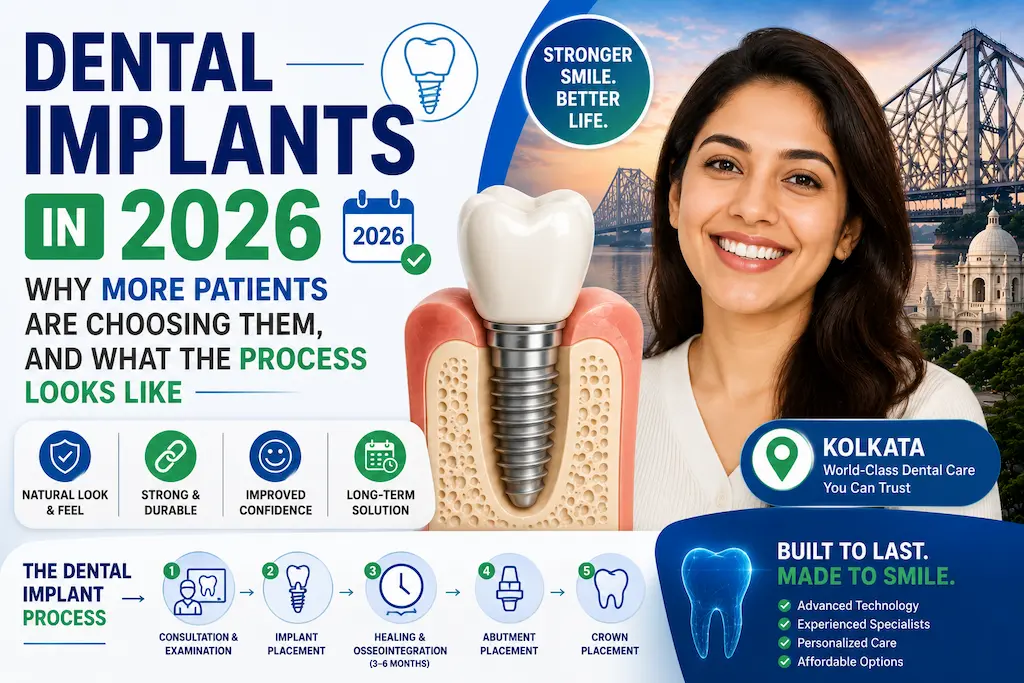
Dental Implants in 2026: Why More Patients Are Choosing Them
Missing teeth used to mean choosing between dentures that slip or bridges that require reshaping healthy teeth next door. In 2026, more adults, especially those 45 and older, are skipping the temporary fixes and going straight to dental implants. This is not a passing trend. Implant dentistry keeps growing as the technology becomes more precise, more comfortable, and more affordable.
At Teeth Care Multispeciality Dental Clinic, our implantology team places dental implants across all five branches in Kolkata. This guide explains what is actually changing in implant dentistry, who is a good candidate, and what the treatment journey looks like from consultation to your finished smile. For exact pricing, our Dental Implants Cost in Kolkata guide breaks the numbers down by case type.
What a Dental Implant Actually Is
A dental implant is a small titanium or zirconia post placed into the jawbone, where it acts as an artificial tooth root. Once it fuses with the bone, a process called osseointegration, a custom crown, designed by our prosthodontics specialists, is fitted on top. The result looks, feels, and functions like a natural tooth.
Unlike dentures, implants do not shift or click when you eat or speak. Unlike bridges, they do not require grinding down the healthy teeth on either side of the gap. If you are weighing the two for a single missing tooth, our comparison of single tooth implant vs bridge in Kolkata lays out exactly how they differ.
Why Implants Are Having a Moment
A few shifts are driving the rising demand:
Patients want permanence
More people are choosing a long-term solution over something that needs regular adjustment, relining, or replacement.
They protect long-term oral health
A missing tooth allows the jawbone beneath it to lose density over time, and neighbouring teeth can drift out of place. An implant helps preserve bone structure and keeps your bite stable. It is also why, whenever a tooth can still be saved, root canal treatment is usually the better first option.
Patients arrive better informed
It is now common for people to come in already asking about implants by name, having researched their options before the appointment
What’s New in Implant Technology
| Advancement | What It Means for Patients |
|---|---|
| 3D imaging and guided placement | Your dentist maps the exact position, angle, and depth of the implant before surgery, for more predictable results and shorter procedures |
| Material choice (titanium vs zirconia) | Titanium remains the strength benchmark; zirconia offers a tooth-coloured, metal-free, hypoallergenic alternative for a more discreet look |
| Same-day solutions (All-on-4) | Patients missing most or all of their teeth can leave with a full, functional set of replacement teeth the same day, skipping the long wait and temporary dentures |
Are You a Candidate?
Most healthy adults with adequate jawbone density are good candidates. Where bone loss has already occurred — which is common after a tooth has been missing for a while — a bone graft can often build the area up enough to support an implant successfully.✅ Generally suitable if you:
- Are a healthy adult with good gum health
- Have adequate jawbone density
- Are a non-smoker or willing to quit around surgery
- Do not have uncontrolled diabetes or clotting disorders
⚠️ May need additional assessment if:
- Significant bone loss has occurred
- Gum disease is currently active
- You have certain systemic health conditions
- You are still growing (typically under 18)
The Implant Process at TCMDC
1
Consultation and Imaging
To assess your jawbone and plan placement with precision using 3D digital scanning.
2
Implant Placement
Positioning the titanium or zirconia post in the jawbone under local anaesthesia. A bone graft is performed first if needed.
3
Healing and Integration
Allowing the implant to fuse with the bone — typically a few months, though same-day (All-on-4) options shorten this considerably for full-arch cases.
4
Custom Restoration
Your permanent crown, bridge, or denture is designed and fitted by our in-house prosthodontics team for a natural look and feel.
💡 With proper care, implants are built to last for decades — often a lifetime — which is why the time invested upfront tends to be worth it.
Why Choose TCMDC for Dental Implants
- 3D imaging and computer-guided implant planning for precise placement
- Choice of titanium and zirconia implant systems
- Same-day (All-on-4) options for patients needing full-arch replacement
- Crown and bridge design handled in-house by our prosthodontics team
- Experienced implantologists across all five Kolkata branches
- A multiple award-winning clinic with 19+ years of experience and 23,000+ patients treated
Implant treatment available at all 5 branches:
Frequently Asked Questions
How long does the whole implant process take?
It varies by case, but generally spans a few months from placement to final restoration, to allow proper healing and integration with the bone. Same-day options can shorten this considerably for full-arch cases.
Does getting an implant hurt?
The placement is done under local anaesthesia, so you should not feel pain during the procedure. Mild soreness for a few days afterward is normal and manageable with standard pain relief.
What if I don't have enough jawbone?
A bone graft can often rebuild the area enough to support an implant. Your dentist will confirm this with imaging during your consultation.
How long do implants last?
With good oral hygiene and regular check-ups, implants are designed to last for decades — often a lifetime.
Are implants better than a bridge?
For many patients, yes, because implants do not require altering neighbouring healthy teeth and they help preserve jawbone density. Our implant vs bridge guide covers the trade-offs in detail.
📖 Also Read
- Dental Implants Cost in Kolkata: full pricing breakdown by case type
- What to Expect After a Dental Implant: recovery and aftercare in detail
- Single Tooth Implant vs Bridge in Kolkata: Choosing the right replacement option
Book Your Dental Implant Consultation in Kolkata
If you are missing one tooth or several, the first step is finding out whether implants are right for you. Advances in imaging, materials, and same-day techniques have made the process faster and more comfortable than ever.
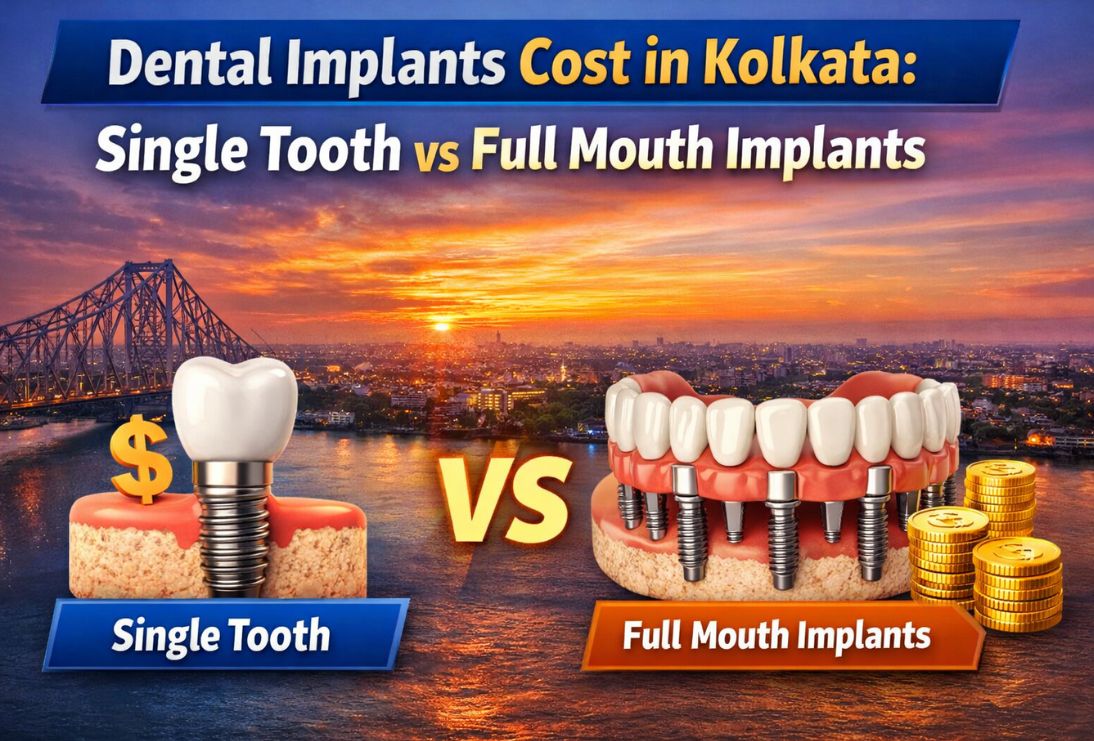
Dental Implants Cost in Kolkata: Single Tooth vs Full Mouth Implants
Dental implants are considered one of the most advanced and reliable solutions for replacing missing teeth. They restore chewing ability, improve facial appearance and help maintain jawbone health. At Teeth Care Multispeciality Dental Clinic, one of the most common questions we receive from patients is about the dental implants cost in Kolkata, especially when comparing single tooth implants and full-mouth dental implants.
Implant treatment cost varies from patient to patient because every mouth is different. The number of missing teeth, bone condition and type of implant solution required all play a role. This guide explains the cost differences clearly so you can make an informed decision with confidence.
To learn more about our clinic and approach, explore Teeth Care Multispeciality Dental Clinic below.
What Factors Influence Dental Implant Cost in Kolkata?
Dental implant pricing is customized because treatment planning depends on individual oral health. At our clinic, implant costs are calculated only after a detailed examination.
Key factors that influence implant cost include:
- Number of teeth being replaced
- Type and brand of implant used
- Bone density and jaw structure
- Need for additional procedures such as bone grafting
- Type of crown or prosthetic teeth
- Complexity of the case
- Technology and diagnostics used
Our implant specialists ensure transparency so patients understand what they are paying for.

Single Tooth Dental Implant Cost in Kolkata
A single tooth dental implant is recommended when one tooth is missing and the surrounding teeth are healthy. It replaces the tooth root and crown independently without affecting nearby teeth.
At Teeth Care Multispeciality Dental Clinic, patients are often relieved to know that single tooth dental implant cost in Kolkata typically ranges between INR 18,000 to INR 37,000, depending on the implant system and crown material used.
What Is Included in a Single Tooth Implant?
- Placement of a titanium dental implant
- Healing phase for bone integration
- Fixing a customised dental crown
Single tooth implants help prevent bone loss and offer a permanent solution compared to bridges or removable options.To understand the implant systems and techniques used by our specialists, visit our Implantology Service.
Single Tooth Implant vs Dental Bridge: Cost and Long-Term Value
Patients often compare implants with dental bridges when replacing a single tooth. Although bridges may appear cheaper initially, they require trimming healthy adjacent teeth and do not stop jawbone loss. Implants may cost more upfront but offer superior longevity and oral health benefits. For a detailed explanation, read single tooth implant vs bridge in Kolkata.
Full Mouth Dental Implants Cost in Kolkata
Full mouth dental implants are ideal for patients who have lost all or most of their teeth. Instead of replacing each tooth individually, this treatment uses strategically placed implants to support a full arch of fixed teeth. At Teeth Care Multispeciality Dental Clinic, we offer advanced full-mouth implant solutions based on patient needs.
Exact Cost for Full Mouth Dental Implants
- All-on-4 full mouth dental implants start from INR 3,85,000
- Final cost may vary based on bone condition, implant brand and prosthetic design
Why Full Mouth Implants Cost More
- Multiple implant placements
- Advanced planning and diagnostics
- Skilled surgical expertise
While the initial investment is higher, full mouth implants provide long-term stability, comfort and natural function.
Single Tooth vs Full Mouth Implants: Cost Comparison
| Aspect | Single Tooth Implant | Full Mouth Implants |
| Number of implants | One | Multiple (All-on-4 or more) |
| Cost range | INR 18,000 – INR 37,000 | Starts from INR 3,85,000 |
| Treatment complexity | Low | High |
| Function restored | One tooth | Entire mouth |
| Long-term value | High | Very high |
Additional Procedures That May Affect Cost
Some patients may need additional treatments before implants can be placed safely. These procedures help ensure long-term success:
- Bone grafting
- Sinus lift
- Gum disease treatment
- Tooth extraction
While these may increase overall cost, they significantly improve implant stability and lifespan.
What to Expect After Dental Implant Surgery
Understanding recovery is an important part of implant planning. Healing time and post-surgical care play a role in overall treatment success. To know more about healing, precautions and follow-up care, read what to expect after a dental implant.
Are Dental Implants Worth the Cost?
Dental implants offer unmatched benefits compared to traditional tooth replacement options:
- Prevent jawbone shrinkage
- Restore natural chewing ability
- Improve facial aesthetics
- Last for decades with proper care
- Eliminate denture discomfort
Although implants involve an investment, they often reduce future dental expenses and improve quality of life.
Dental Implant Cost for Senior Patients
Age alone does not increase implant cost. Bone quality and overall health are more important factors. Many senior patients choose implant-supported dentures or full mouth implants to regain confidence and comfort.
For patients in North Kolkata, consultations are available at our Dental Clinic in Chinar Park.
Choosing the Right Clinic for Implant Treatment
Implant success depends on experience, planning and technology. Choosing treatment based only on low cost can lead to complications. Patients can visit our conveniently located clinics for expert care:
Why Choose Teeth Care Multispeciality Dental Clinic
Teeth Care Multispeciality Dental Clinic is trusted for safe, precise and long-lasting implant treatments in Kolkata. Our implantologists use advanced diagnostics and guided techniques to ensure predictable results.
What sets us apart:
- Experienced implant specialists
- Advanced imaging and planning
- High-quality implant systems
- Strict sterilisation protocols
- Transparent cost discussion
- Flexible payment options
To know more about our team and philosophy, visit About Teeth Care Multispeciality Dental Clinic.
How to Get an Exact Implant Cost Estimate
The exact cost of dental implants can only be determined after a detailed examination and imaging.
To book a consultation with our specialists, visit Contact Us.
Conclusion
Understanding dental implants cost in Kolkata helps you choose the right treatment with confidence. Single tooth implants generally cost between INR 18,000 to INR 37,000, while full mouth dental implants such as All-on-4 start from INR 3,85,000. At Teeth Care Multispeciality Dental Clinic, we focus on long-term success, comfort and transparent pricing to deliver the best possible outcomes.
FAQs
What is the cost of a single tooth dental implant in Kolkata?
Single tooth implants usually range between INR 18,000 and INR 37,000.
How much do full mouth dental implants cost in Kolkata?
Full mouth implants such as All-on-4 start from INR 3,85,000.
Do implants require special care?
Yes. Implants preserve bone and do not damage adjacent teeth.
What is the cost of a single tooth dental implant in Kolkata?
No. Normal oral hygiene and regular checkups are sufficient.
How long do dental implants last?
With proper care, implants can last for decades.
Is implant treatment painful?
The procedure is done under local anesthesia and is comfortable.
Are EMI options available?
Yes. Flexible payment options are available.
How do I know which implant option is right for me?
A clinical evaluation helps determine the best solution.
Best Age to Get Dental Implants: A Complete Patient Guide
Dental implants are one of the most trusted ways to restore missing teeth. They look natural, feel strong and help maintain long term oral health. Many patients who visit our clinic want to know the best Age to Get Dental Implants to consider implants. While age plays a role, it is not the only deciding factor. Bone density, jaw development, gum health and overall medical condition are equally important.
If you want to explore our treatments or understand more about the clinic, you can learn about Teeth Care Multispeciality Dental Clinic.
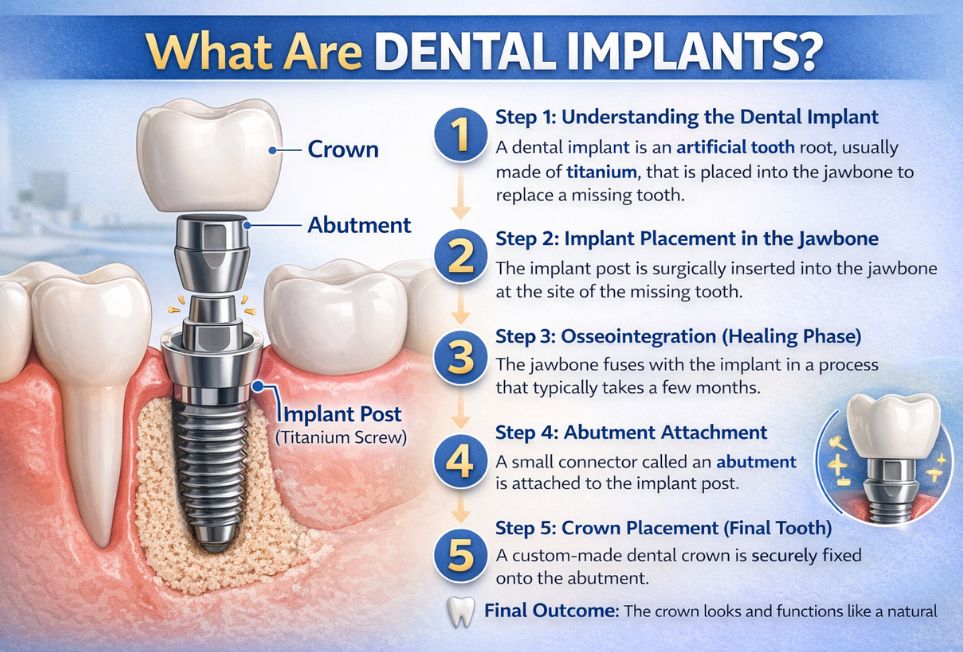
What Are Dental Implants?
Dental implants are titanium posts placed in the jawbone to replace missing tooth roots. After they fuse with the bone, they provide a strong foundation for a crown, bridge or denture. They function like natural teeth and preserve bone structure.
If you want to see the types of implant procedures we offer, refer to our Implantology Service.
Is There a Perfect Age for Dental Implants?
There is no single perfect age. Instead, there is an optimal age range when the jawbone is fully developed and healthy enough to support implants. Most dentists wait until jaw growth is complete before considering implant placement.
General guidelines:
- Not recommended before age 18
- Ideal age range: 25 to 60
- Seniors above 60 can still qualify depending on bone health
Bone maturity and health are more important than age alone.
Minimum Age for Dental Implants
Teenagers usually do not qualify for implants because their jawbone continues to grow until late teens or early twenties. Placing implants too soon can result in misalignment as the jaw develops.
For an evaluation or consultation, you can visit our Dental Clinic Ballygunge branch.
Ages 25 to 40
This is considered the most favourable time for dental implants. Bone density is strong, healing is quicker and implant integration is predictable. Patients in this group often achieve the longest lasting results.
Ages 40 to 60
Many patients experience tooth loss in this age group due to gum disease or wear. With proper evaluation and disease management, implants work very well. Recovery is stable and long lasting.
Ages 60 and above
Seniors often believe they are too old for implants, which is not true. As long as bone density and overall health are acceptable, implants can be placed safely even in older adults.
If you live near our Chinar Park location, you can visit our Dental Clinic in Chinar Park for a detailed implant assessment.
Who Should Avoid Dental Implants?
Not every patient is an immediate candidate. Implants may not be recommended in cases such as:
- Active gum infection
- Uncontrolled diabetes
- Heavy smoking
- Severe untreated bone loss
- Chronic teeth grinding
- Certain immune disorders
With proper treatment planning or lifestyle adjustments, many patients can still qualify later.
How Bone Health Influences Implant Success
Even if you fall within the ideal age range, bone density plays a major role. A CBCT scan helps measure bone height, width and quality. If the jawbone is insufficient, bone grafting or sinus lift procedures can help create support for implants.
For patients in and around Dunlop, you can consult our Dental Clinic in Dunlop for bone assessment and detailed implant planning.
Why the Right Age Improves Results
Placing implants at the right time contributes to:
- Faster healing
- Stronger fusion with bone
- Higher stability
- Better chewing function
- Lower risk of complications
- Long lasting results
Correct timing ensures a smoother experience and predictable outcomes.
Benefits of Early Implant Placement (25-40)
Getting implants earlier in life provides several long term advantages:
- Prevents jawbone shrinking
- Maintains alignment of nearby teeth
- Supports facial structure
- Reduces the need for complex future treatments
- Provides natural chewing stability
- Preserves oral health
Younger patients often enjoy the longest lifespan for implants due to stronger bone health.
Are You Too Old for Implants?
There is no upper age limit. Many older adults choose implants to improve comfort and stability. If bone density is sufficient and medical conditions are stable, seniors can safely receive implants.
To learn about our clinic’s expertise, history and team, you can visit About Teeth Care Multispeciality Dental Clinic
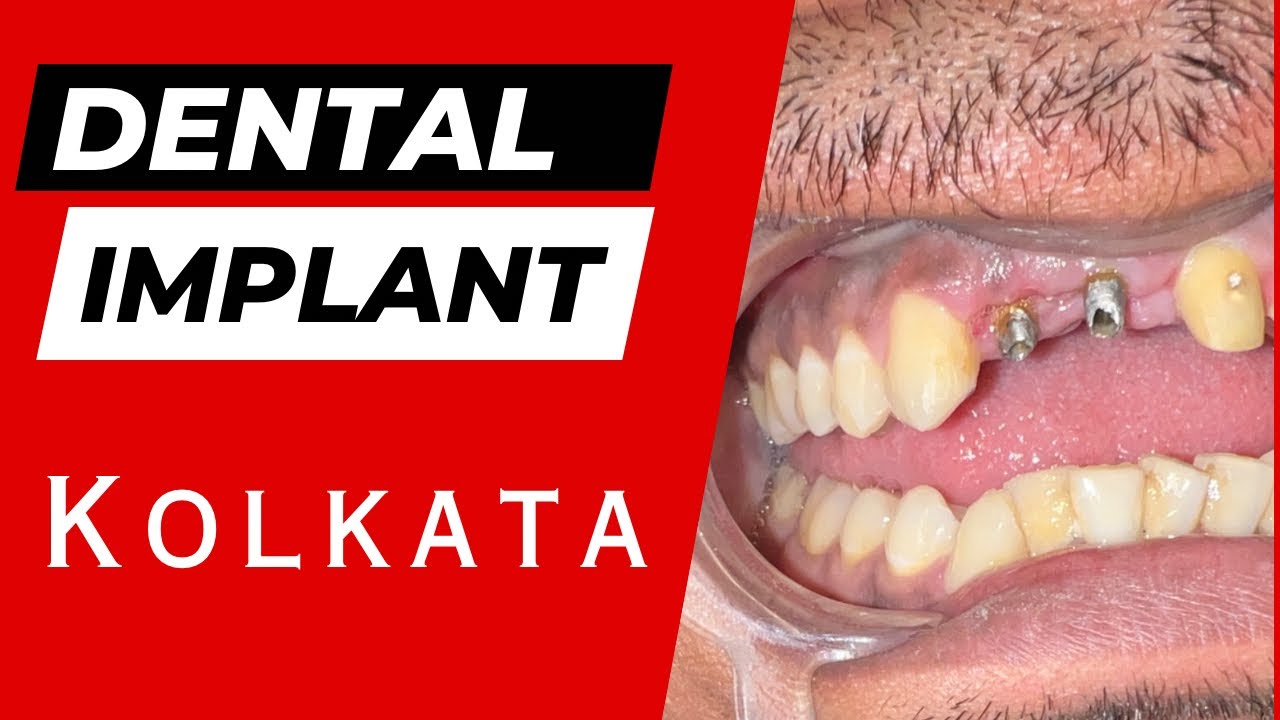
How to Know If You Are a Suitable Candidate
A comprehensive evaluation helps determine eligibility. The dentist will assess:
- Digital X rays or CBCT scan
- Gum health condition
- Bone density level
- Bite alignment
- Medical history
- Lifestyle habits
Once evaluated, a personalised treatment plan is created.
To book your appointment directly, you can use the Contact Us page.
Why Choose Teeth Care Multispeciality Dental Clinic
Teeth Care Multispeciality Dental Clinic is known for its advanced implant solutions supported by digital diagnostics and experienced implantologists. Our team focuses on precision, comfort and long term success.
What makes our clinic a trusted choice:
- Skilled and experienced implant surgeons
- Guided implant surgery
- Advanced scanning and imaging
- High quality implant systems
- Clean and hygienic environment
- Patient focused approach
- Affordable EMI options available
We ensure smooth treatment, predictable healing and natural looking results.
Conclusion
The best age to get dental implants is usually between 25 and 60. However, age alone does not determine suitability. Bone health, gum condition and overall medical status are the key deciding factors. With proper evaluation and planning, implants can be placed safely in younger as well as older adults.
If you want to explore more helpful dental articles, you can visit our Teeth Care Blogs section.
FAQs
What is the best age for dental implants?
The ideal age is between 25 and 60 because bone density and healing are optimal.
Can teenagers get implants?
Not usually. Jaw growth must be complete before considering implants.
Are implants suitable for senior citizens?
Yes. Seniors often qualify if their bone health is good.
How long do implants last?
With proper care, implants can last for decades.
Does the implant procedure hurt?
The procedure is done under local anesthesia, so discomfort is minimal.
How long is the healing period?
Gum healing takes two weeks, and full bone integration takes a few months.
What if I do not have enough bone?
Bone grafting or sinus lift can help build adequate support.
Why choose Teeth Care Multispeciality Dental Clinic?
We use advanced technology, guided surgery and experienced implantologists, to best Age to Get Dental Implants for safe and successful results.

What to Expect After a Dental Implant?
Dental implant treatment is a highly predictable and long-lasting solution for missing teeth, but many patients feel anxious about the recovery phase. Understanding what happens after implant placement helps reduce fear and ensures better healing.
At Teeth Care Multispeciality Dental Clinic in Kolkata, we guide our patients through every stage of dental implant recovery with clarity, medical precision, and continuous support. This detailed guide explains exactly what to expect after a dental implant, from the first day to long-term care.
Immediately After Dental Implant Surgery (First 24 Hours)
The first 24 hours after dental implant placement are crucial for proper healing. During this period, your body begins the initial healing response and forms a protective clot around the implant site.
Most patients experience mild and manageable symptoms that settle quickly when post-operative instructions are followed carefully.
Normal Post-Surgery Symptoms
| Symptom | What It Means | Expected Duration |
| Mild bleeding | Natural clot formation | Few hours |
| Numbness | Effect of anesthesia | 2-4 hours |
| Gum tenderness | Tissue healing response | 1-2 days |
| Mild swelling | Normal inflammation | 2-3 days |
Patients treated under our advanced dental implant treatment in Kolkata generally experience minimal discomfort due to precise surgical planning.
Pain After a Dental Implant in kolkata
Pain after dental implant surgery is usually mild and far less than what patients expect. Most people compare it to routine dental procedures rather than surgery.
Pain intensity reduces steadily each day and is easily controlled with prescribed medication.
Pain Timeline After Implant Placement
| Time Period | Expected Pain Level | Management |
| Day 1 | Mild soreness | Prescribed medication |
| Day 2-3 | Slight tenderness | Normal healing |
| Day 4-5 | Significant reduction | Minimal or no medication |
| After 1 week | No pain | Full comfort |
Persistent or increasing pain after the fourth day should always be evaluated by your dentist.
Swelling and Bruising After Implant Surgery
Swelling is a natural part of the healing process and indicates that your body is responding correctly to surgery. Bruising may appear externally in some cases but resolves naturally.
Most patients visiting our Kolkata clinics notice controlled swelling due to careful tissue handling.
Swelling Progression
| Day | Swelling Status | Normal Expectation |
| Day 1 | Minimal | Normal |
| Day 2-3 | Peak swelling | Expected |
| Day 4-5 | Gradual reduction | Healing phase |
| Day 7 | Mostly resolved | Normal recovery |
Eating After Dental Implant Surgery
Diet plays a critical role in protecting the implant site and supporting healing. Soft foods reduce pressure on the implant and help prevent complications.
Chewing on the opposite side of the implant is strongly recommended during early recovery.
Diet Timeline After Implant Placement
| Timeframe | Food Texture | Purpose |
| First 24 hours | Soft and cool | Protect clot |
| Day 2-5 | Soft solids | Reduce pressure |
| After 1 week | Semi-normal | Healing support |
| After crown placement | Normal | Full function |
Hot, hard, or sticky foods should be avoided until your dentist confirms stability.
Oral Hygiene After Dental Implant Placement
Maintaining oral hygiene is essential for implant success, but cleaning must be gentle during early healing. Proper hygiene prevents infection and supports bone integration.
Patients are carefully guided by our prosthodontics and smile restoration department on safe cleaning techniques.
Oral Care Guidelines
| Time Period | Cleaning Approach | Reason |
| First 24 hours | Avoid brushing site | Protect healing tissue |
| After 24 hours | Gentle brushing | Prevent plaque |
| After 3 days | Normal brushing nearby | Support healing |
| Long term | Regular hygiene | Implant longevity |
Osseointegration: Bone Healing Around the Implant
Osseointegration is the most important phase of implant recovery. During this stage, the implant fuses permanently with the jawbone.
This biological process ensures the strength and long-term stability of the dental implant.
Osseointegration Timeline
| Phase | Duration | What Happens |
| Early healing | 2-4 weeks | Bone adaptation |
| Active integration | 2-3 months | Bone fusion |
| Final integration | 3-6 months | Full stability |
The success of this phase determines how long your implant will last.
Stitches and Follow-Up Visits
Stitches help the gum heal properly around the implant and usually dissolve on their own. Follow-up visits allow dentists to monitor healing and prevent complications.
Patients are encouraged to attend reviews at the New Town dental clinic, where advanced diagnostics support precise healing assessment.
Stitch and Review Timeline
| Aspect | Expected Time |
| Stitch dissolution | 7-10 days |
| First follow-up | 7 days |
| Healing review | 4-6 weeks |
| Crown planning | After integration |
Temporary Teeth During Healing
Temporary restorations may be provided depending on the location of the implant. These restorations are designed to maintain appearance while protecting the implant.
They are carefully shaped to avoid pressure on the healing implant.
Temporary Restoration Usage
| Implant Location | Temporary Tooth | Purpose |
| Front teeth | Often provided | Aesthetics |
| Back teeth | Sometimes avoided | Protection |
| Multiple implants | Case-dependent | Function support |
Final Crown Placement After Healing
Once osseointegration is complete, the final crown is placed to restore full chewing and appearance. This stage completes the implant treatment.
Implant crowns are custom-designed under the supervision of Dr. Sanket Chakraverty, Prosthodontist and Implantologist, ensuring precise bite alignment.
Final Restoration Process
| Step | Description |
| Implant exposure | Access implant |
| Abutment placement | Connector fixed |
| Crown fitting | Custom ceramic tooth |
| Bite adjustment | Comfort ensured |
Long-Term Care After a Dental Implant
Dental implants require the same care as natural teeth. Consistent hygiene and regular dental visits ensure long-term success.
With proper care, implants can last for decades.
Long-Term Implant Maintenance
| Care Aspect | Recommendation |
| Brushing | Twice daily |
| Flossing | Daily |
| Dental visits | Every 6 months |
| Professional cleaning | As advised |
Warning Signs After Dental Implant Surgery
Certain symptoms should never be ignored as they may indicate complications. Early intervention prevents implant failure.
When to Contact Your Dentist
| Symptom | Clinical Significance |
| Increasing pain | Possible infection |
| Persistent swelling | Healing issue |
| Implant movement | Integration failure |
| Pus or fever | Infection |
Why Dental Implant Recovery Is Better Than Other Options
Compared to dentures or bridges, dental implant recovery offers better comfort, stability, and oral health benefits.
Patients report higher confidence and chewing efficiency once healing is complete.
Comparison of Tooth Replacement Recovery
| Factor | Implant | Bridge | Denture |
| Stability | Excellent | Moderate | Low |
| Bone preservation | Yes | No | No |
| Long-term comfort | High | Medium | Low |
| Maintenance | Normal | Moderate | High |
Why Choose teethcare in Kolkata
Choosing the Teeth Care Multispeciality Dental Clinic plays a major role in recovery success. Teeth Care combines experience, technology, and ethical treatment planning. Patients can learn more through our multispeciality dental clinic profile in Kolkata and explore specialists via the expert dental care team network. Clinical Strengths
| Aspect | Benefit |
| Experienced implantologists | Predictable results |
| Digital diagnostics | Precision planning |
| Multispeciality care | Safety |
| Multiple Kolkata locations | Convenience |
Conclusion
Knowing what to expect after a dental implant removes uncertainty and builds confidence. With modern techniques and proper care, dental implant recovery is smooth, comfortable, and highly successful. At Teeth Care Multispeciality Dental Clinic, we remain committed to guiding every patient from surgery to final crown with transparency, expertise, and long-term care, so your new smile stays strong for life.
FAQ about After a Dental Implant!
How long does it take to recover after a dental implant?
Initial recovery usually takes 7–10 days, while complete bone integration and healing can take 3–6 months depending on bone quality and overall health.
Is pain normal after a dental implant?
Mild discomfort is normal for a few days after implant surgery. Pain typically reduces daily and is manageable with prescribed medication.
How long does swelling last after implant surgery?
Swelling usually peaks within 48–72 hours and gradually subsides over the next few days. Most swelling resolves within one week.
When can I eat normally after a dental implant?
Soft foods are recommended for the first few days. Normal eating can resume gradually once healing progresses and the dentist confirms stability.
How do I clean my mouth after dental implant surgery?
Gentle brushing can start after 24 hours. The implant area should be kept clean without aggressive brushing or forceful rinsing.
What is osseointegration in dental implants?
Osseointegration is the process where the implant fuses with the jawbone, providing strength and long-term stability. This process usually takes several months.
Can a dental implant fail during healing?
Implant failure is rare but can occur due to infection, smoking, or poor oral hygiene. Regular follow-ups help detect and prevent issues early.
When is the final crown placed on a dental implant?
The final crown is placed after complete bone integration, usually between 3 to 6 months after implant placement.
Do dental implants need special long-term care?
No special care is required. Dental implants should be maintained like natural teeth with brushing, flossing, and regular dental visits.
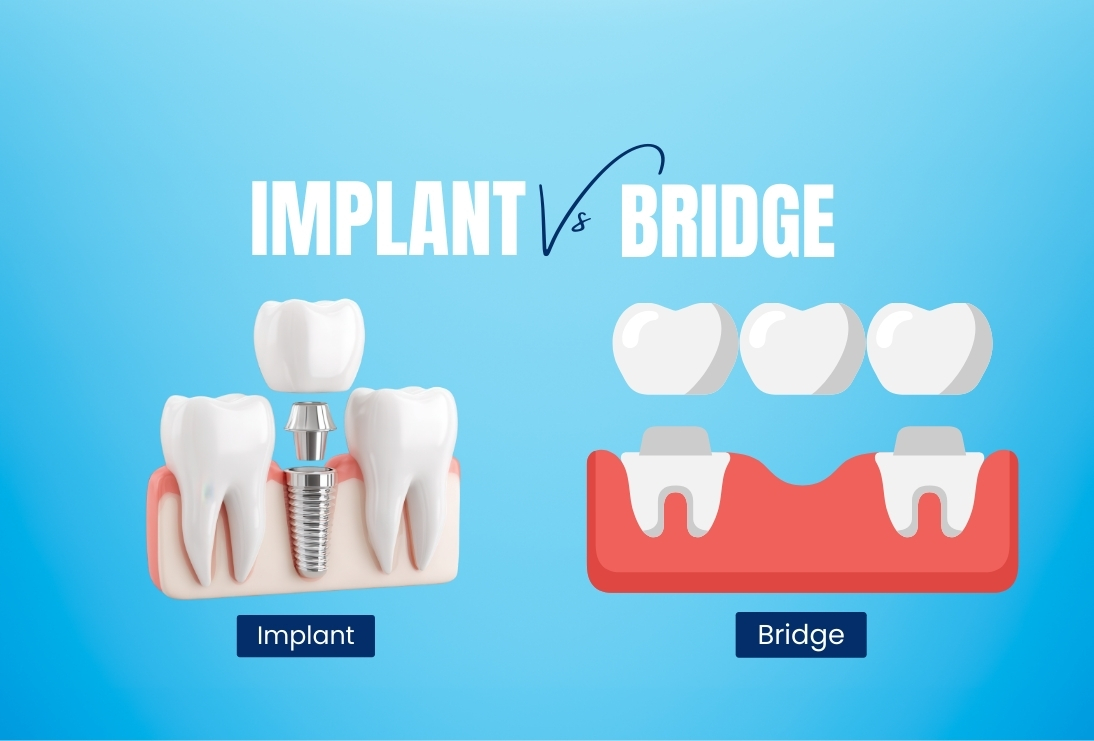
Single Tooth Implant vs Bridge in Kolkata
A single missing tooth may look like a small problem, but medically it can create serious long-term complications if ignored. At Teeth Care Multispeciality Dental Clinic in Kolkata, we regularly treat patients from New Town, Chinar Park, Ballygunge, Dunlop, and Charnock who come to us after suffering jawbone loss, facial sagging, drifting teeth, bite imbalance, and chewing difficulty caused by just one missing tooth.
The most common question we hear is:“What is better for one missing tooth – a single tooth implant or a dental bridge?”
Both treatments are effective, but they work in completely different ways. This expert guide will help you understand the difference between single tooth implant vs bridge, their cost in Kolkata, durability, comfort, appearance, bone health impact, and which option is better for you.
Why Replacing a Single Missing Tooth Is Medically Important
When a tooth is lost and not replaced on time, the following changes begin silently:
- Jawbone starts shrinking
- Nearby teeth tilt into the empty space
- Bite becomes uneven
- Gum infection risk increases
- Facial structure begins collapsing
- Chewing efficiency reduces
This is why dentists strongly recommend early single tooth replacement in Kolkata using modern treatment options.
What Is a Single Tooth Dental Implant?
A single-tooth dental implant is a permanent replacement where a titanium implant is placed inside the jawbone to function like a natural tooth root. Once it bonds with the bone, a ceramic crown is placed on top to restore full function and appearance.
At Teeth Care, this is done through our advanced implantology treatment in Kolkata using digital planning and guided implant placement.
Components of a Single Tooth Implant
| Component | Function |
| Titanium Implant | Artificial tooth root |
| Abutment | Connector |
| Ceramic Crown | Natural visible tooth |
Main Benefits of Single Tooth Implant
- Permanent solution
- Prevents jawbone shrinkage
- No damage to nearby teeth
- Feels like a natural tooth
- Strong chewing power
- 25+ years of durability
Implants at our clinic are placed under the expertise of Dr. Sanket Chakraverty, Prosthodontist & Implantologist, who handles complex implant restorations.
What Is a Dental Bridge?
A dental bridge replaces a missing tooth by trimming the two adjacent teeth and using them to support an artificial tooth in between. This treatment is part of our restorative dental solutions for missing teeth and is often recommended when implants are not possible.
Types of Dental Bridges
- Traditional Bridge
- Cantilever Bridge
- Maryland Bridge
- Implant-Supported Bridge
Advantages of Dental Bridge
- Faster treatment
- No surgery
- Lower starting cost
- Suitable for low bone density patients
Implant vs Bridge – Quick Comparison
| Feature | Implant | Bridge |
| Replaces root | Yes | No |
| Affects nearby teeth | No | Yes |
| Prevents bone loss | Yes | No |
| Lifespan | 25+ years | 8-12 years |
| Surgery | Yes | No |
| Long-term value | High | Lower |
Procedure Comparison in Kolkata
Single Tooth Implant Procedure
- 3D scan and diagnosis
- Precise implant placement
- Healing phase (3–6 months)
- Abutment and crown placement
All implant crowns are designed with help from our prosthodontics and smile restoration department to ensure a perfect bite and natural aesthetics.
Dental Bridge Procedure
- Trimming of adjacent teeth
- Digital impressions
- Temporary bridge
- Final cemented bridge in 7–14 days
Durability and Lifespan Comparison
| Factor | Implant | Bridge |
| Lifespan | 25+ years | 8-12 years |
| Replacement | Rare | Frequent |
| Bone Protection | Yes | No |
| Long-Term Cost | Lower | Higher |
Winner: Tooth Implant
Effect on Adjacent Teeth

Jawbone & Facial Structure Protection
Only implants stimulate the jawbone and prevent facial collapse. Bridges do not stop bone shrinkage.
Aesthetic and Comfort Comparison
| Factor | Implant | Bridge |
| Look | Natural | Good |
| Gum Health | Maintained | May Recede |
| Chewing | Strong | Moderate |
| Speech | Natural | Adjustment Needed |
Cost of Single Tooth Implant vs Bridge in Kolkata
| Treatment | Cost Range |
| Single Tooth Implant | ₹18,000 – ₹38,000 |
| Dental Bridge | ₹15000 – ₹120000 |
For exact pricing, many patients visit our New Town dental clinic for implants and bridges for digital evaluation.
Recovery and Aftercare
| Factor | Implant | Bridge |
| Recovery | 7-10 days | None |
| Food Restriction | Temporary | Minimal |
| Oral Care | Normal | Special Floss |
You can also read our detailed guide on dental implant recovery time.
Who Should Choose a Single Tooth Implant in Kolkata?
- Patients wanting a permanent solution
- Younger adults
- Patients with a good jawbone
- Those concerned about facial structure
- Patients protecting nearby teeth
Who Should Choose a Dental Bridge?
- Patients with severe bone loss
- Elderly patients
- Patients who cannot undergo surgery
- Budget-focused patients
Which Is Better Long-Term – Implant or Bridge?
If your goal is lifetime durability, bone protection, and natural chewing, implants are clearly superior.
Bridges are best when implants are not medically possible.
Why Choose Us?
Teeth Care is one of the most trusted centers for single tooth implants and dental bridges in Kolkata, with branches across:
- New Town
- Chinar Park
- Ballygunge
- Dunlop
- Charnock
Learn more through our dental clinic profile in Kolkata,
and explore our specialists via the expert dental care team network.
Final Verdict: Single Tooth Implant vs Bridge in Kolkata
| Goal | Best Choice |
| Permanent solution | Implant |
| Lowest starting cost | Bridge |
| Natural chewing | Implant |
| Jawbone protection | Implant |
| No surgery | Bridge |
Overall Winner: Single Tooth Dental Implant
Book Your Consultation in Kolkata
If you are confused between an implant or bridge, the smartest step is expert evaluation.
You can easily book a dental consultation in Kolkata with our expert team for a personalized treatment plan.
Conclusion
Choosing between a single tooth implant vs bridge is not just about cost. It impacts your oral health, facial appearance, chewing strength, and confidence for life. While bridges offer quick results at lower cost, implants provide permanent strength, bone protection, and unmatched comfort.
At Teeth Care Multispeciality Dental Clinic, Kolkata, we ensure every patient receives the safest, most effective, and long-lasting tooth replacement solution.
FAQ about single implant vs Bridge
Which is better for one missing tooth – implant or bridge?
A single tooth implant is the better long-term solution because it replaces both the root and crown, preserves jawbone, and does not damage nearby teeth. A dental bridge is suitable when surgery is not possible or a quicker, lower-cost option is needed.
What is the cost of a single tooth implant in Kolkata?
The cost of a single tooth implant in Kolkata generally ranges between ₹35,000 and ₹70,000. The final cost depends on bone condition, implant brand, and crown type.
What is the cost of a dental bridge in Kolkata?
A dental bridge for one missing tooth usually costs between ₹12,000 and ₹30,000 depending on the material and number of supporting teeth involved.
Does a dental bridge damage healthy teeth?
Yes, a traditional bridge requires trimming two adjacent healthy teeth to support the artificial tooth. This permanently weakens those teeth and may increase the risk of future dental problems.
Is the implant procedure painful?
No, implant placement is done under local anesthesia, making the procedure painless. Mild discomfort after surgery is temporary and easily managed with medication.
How long does a single tooth implant last?
With proper oral hygiene and regular dental checkups, a single tooth implant can last 25 years or even a lifetime.
How long does a dental bridge last?
A dental bridge typically lasts 8 to 12 years. It may need replacement earlier if supporting teeth develop decay or gum problems.

How Long Is the Dental Implants Recovery?
Dental implants are one of the most trusted and natural-looking solutions for missing teeth. They restore both function and appearance, helping you smile, chew, and speak with confidence again. However, many patients wonder, how long does it take to recover from a dental implant procedure?
The recovery time for dental implants varies from person to person. It depends on factors like oral health, bone condition, and the number of implants placed. In this detailed guide, we’ll explore the entire healing process, from the first day after surgery to full recovery.
What Are Dental Implants?
A dental implant is a small titanium post surgically inserted into the jawbone to act as an artificial tooth root. Once it fuses with the bone, a process called osseointegration, a crown or artificial tooth is attached on top, completing the restoration.
Dental implants are preferred because they:
- Look and feel like natural teeth
- Prevent bone loss
- Require no support from adjacent teeth
- Provide a permanent and stable solution
The implant’s success depends heavily on how well your body heals after surgery, which makes understanding the recovery timeline very important.
The Average Dental Implants Recovery Timeline
In general, dental implant recovery takes between 3 to 6 months. But this is not the same for everyone. Some people heal faster, while others may need additional time, especially if bone grafting or multiple implants are involved.
Here’s a breakdown of what you can expect:
This timeline may shift based on your individual health and lifestyle habits
| Stage | Timeline | What Happens |
| Initial Healing | 1–2 weeks | Gums heal, swelling and discomfort reduce. |
| Osseointegration Phase | 3–6 months | The implant fuses with the jawbone. |
| Abutment Placement | 1–2 weeks | Gums heal after attaching the connector piece. |
| Crown Placement | After full healing | The permanent crown is fixed, completing the process. |
The Dental Implant Healing Stages Explained
To better understand how long recovery takes, it helps to know what happens at each stage.
1. The First 24–48 Hours: Immediate Healing Phase
Right after the surgery, it’s normal to experience mild discomfort, swelling, or minor bleeding. These are natural signs that your body has started healing.
What You’ll Feel:
- Slight swelling or tenderness around the surgical area
- Light bleeding during the first 24 hours
- Some jaw stiffness or mild pain
Care Tips:
- Apply ice packs on the cheek to minimize swelling.
- Eat soft, cool foods such as yogurt, soups, and mashed potatoes.
- Avoid touching the surgical site with your tongue or fingers.
- Rest and avoid any heavy physical activity.
2. Week 1–2: Gum Healing Stage
Within a week, the gums begin to close around the implant. Pain and swelling will reduce significantly, and you’ll start to feel more comfortable.
During This Time:
- Any stitches (if non-dissolvable) may be removed.
- The implant area starts to stabilize
- Eating and talking become easier
Helpful Tips:
- Continue using a prescribed mouth rinse.
- Keep your mouth clean but brush gently near the implant site.
- Avoid smoking and alcohol, as they slow healing.
- Stick to soft foods if your gums still feel tender.
3. Month 1–3: Osseointegration Stage
This is the most critical phase of the healing process. The implant slowly bonds with your jawbone, forming a strong base that will support your new tooth.
What’s Happening Inside:
- Bone cells grow around the implant surface.
- The implant becomes part of your jaw structure.
- There’s usually no pain, though the healing continues internally.
Even if you feel fine, this stage requires patience. Proper healing here ensures long-term success and stability of the implant.
4. Month 4–6: Abutment and Crown Placement
Once the implant has fused with the bone, your dentist will place an abutment, which connects the implant to the crown. After the gums heal around it (usually 1–2 weeks), your final dental crown is attached.
The crown is custom-made to match the color, shape, and size of your natural teeth. Once fitted, it looks completely natural and functions just like a real tooth.
What Affects Dental Implant Recovery Time?
Not everyone heals at the same pace. Several factors can affect how long it takes for your dental implant to recover fully.
- Bone Health and Density: A strong jawbone helps the implant integrate faster. If the bone is thin or weak, a bone graft may be necessary before the implant, which adds extra healing time.
- Oral Hygiene: Good oral hygiene is crucial for preventing infection and ensuring proper healing. Poor cleaning habits can lead to inflammation or implant failure.
- Overall Health: People with diabetes, autoimmune conditions, or poor immune response may take longer to heal. Managing chronic health conditions and maintaining a balanced diet can improve recovery.
- Smoking and Alcohol: Nicotine restricts blood flow and reduces oxygen supply to tissues, making healing slower. Alcohol can also interfere with medication and wound recovery. It’s best to avoid both during recovery.
- Number of Implants: Healing time increases if you’ve had multiple implants placed or undergone full-mouth reconstruction compared to a single implant.
- Additional Procedures: If you had a sinus lift or bone grafting, expect a longer recovery timeline since these procedures need their own healing period before the implant can be placed.
Tips to Speed Up Dental Implant Recovery
While you can’t rush natural healing, you can support your body’s recovery with proper care.
- Follow Post-Operative Instructions: Your dentist will give you clear aftercare guidelines. Stick to them strictly, especially when it comes to medications, diet, and cleaning.
- Maintain Gentle Oral Hygiene: Use a soft-bristled toothbrush and avoid brushing directly over the implant site for the first few days. Rinse your mouth gently with salt water or an antiseptic mouthwash to reduce bacteria.
- Eat Soft, Nutritious Foods: Soft foods like oatmeal, scrambled eggs, and smoothies are ideal in the first few weeks. Avoid hard, crunchy, or sticky foods that can disturb the implant site.
- Stay Hydrated: Drink plenty of water to flush out toxins and keep your mouth moist, which promotes tissue healing.
- Avoid Pressure on the Implant: Do not chew on the side where the implant is placed until it’s fully healed.
- Keep Regular Follow-Up Appointments: Your dentist will monitor your healing progress through periodic check-ups. Regular visits help identify and manage any early signs of complications.
Common Symptoms During Dental Implant Recovery
Some symptoms are completely normal during the healing process. However, knowing what’s normal and what’s not helps you stay alert.
Normal Symptoms
Normal Symptoms
- Mild pain or soreness for a few days
- Slight swelling around gums and jaw
- Minor bleeding within the first 24–48 hours
- Temporary bruising near the surgical area
When to Contact Your Dentist
Call your dentist immediately if you experience:
- Continuous or heavy bleeding
- Severe pain that doesn’t improve with medication
- Swelling that worsens after a few days
- Fever, pus, or a bad taste in the mouth
Prompt attention can prevent infection and ensure successful healing.


Eating After Dental Implant Surgery
A common question patients ask is: When can I start eating normally again?
You can usually start eating soft foods within 24 to 48 hours. Avoid anything hard, crunchy, or sticky for at least a couple of weeks. Gradually reintroduce solid foods as your comfort level improves.
Foods to Eat During Recovery:
- Mashed potatoes
- Smoothies
- Yogurt
- Scrambled eggs
- Soups
Foods to Avoid:
- Nuts, popcorn, and chips
- Sticky sweets like caramel
- Hot and spicy foods
- Carbonated or alcoholic drinks
Following a balanced diet supports your immune system and speeds up tissue healing.
Dental Implant Healing vs. Complete Recovery
It’s important to understand that gum healing and complete implant recovery are not the same.
- Gum Healing: Takes about 1–2 weeks.
- Osseointegration (Bone Healing): Can take 3–6 months.
Even if your gums look healed from the outside, the internal bone healing continues for several months. Only when osseointegration is complete can the final crown be safely attached.
How to Maintain Dental Implants After Recovery
Once your implants have fully healed, maintenance becomes key. With proper care, implants can last for decades or even a lifetime.
- Brush Twice a Day: Use a soft-bristled toothbrush and fluoride toothpaste to clean your teeth and implant crown.
- Floss Daily: Clean between your teeth using dental floss or an interdental brush to prevent plaque buildup.
- Regular Dental Check-Ups: Visit your dentist every six months for cleaning and examination.
- Avoid Bad Habits: Don’t chew ice, open bottles with your teeth, or use your teeth as tools.
- Maintain a Healthy Lifestyle: Eat a balanced diet, quit smoking, and manage any chronic health conditions. These habits support long-term implant success.
Why Choose Teeth Care Multispeciality Dental Clinic for Dental Implants
The success of a dental implant doesn’t just depend on your body’s healing, it also depends on your dentist’s skill and experience.
At Teeth Care Multispeciality Dental Clinic, our implantologists specialize in minimally invasive implant surgery that ensures:
- Reduced discomfort
- Faster healing time
- Long-lasting, natural-looking results
Our clinic combines advanced dental technology with personalized care, helping patients achieve healthy smiles that last for years.
Conclusion
So, how long is the recovery time for dental implants?
In most cases, it takes about 3 to 6 months for complete healing. The first 1–2 weeks involve gum recovery, while osseointegration takes a few months more.
Every patient’s healing journey is different, but with proper care, patience, and guidance from an experienced dental team, your implants can last a lifetime.
If you’re considering dental implants, consult the experts at Teeth Care Multispeciality Dental Clinic to understand your treatment plan and personalized recovery timeline.